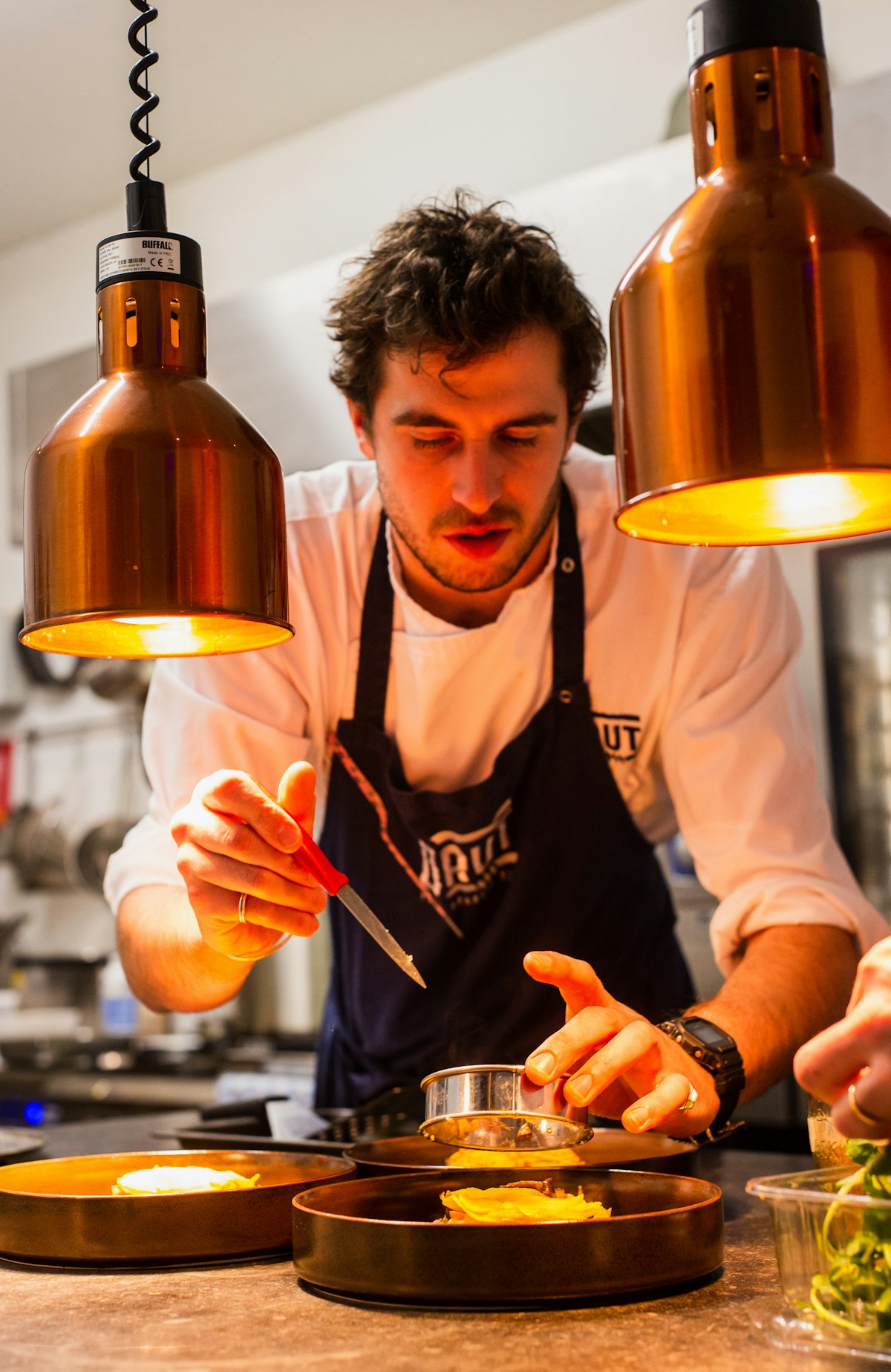
Chef Adrian Constantinescu has been the creative force behind Mega Film Restaurant's culinary excellence for over a decade. In this exclusive interview, he shares his philosophy on food, creativity, and what makes dining truly memorable.
Andrei: Chef Adrian, thank you for taking time out of your busy kitchen. Let's start with the basics—what drew you to cooking?
Chef Adrian: For me, it was always about connection. Growing up in Brașov, I spent countless hours in my grandmother's kitchen. She would tell stories while cooking—about her childhood, about the history of each dish, about the farmers who grew the ingredients. I realized that food is never just about sustenance. It's about memory, culture, love, and connection. That's what I try to create here every night.
The Journey to Excellence
A: Your training took you to some of Europe's finest kitchens. How did those experiences shape your approach?
CA: Le Cordon Bleu gave me the technical foundation—the classical techniques that every serious chef needs to master. But my real education came from working in Michelin-starred restaurants across France, Spain, and Italy. Each chef I worked under taught me something different about precision, creativity, and discipline.
In France, I learned that technique is non-negotiable. In Spain, especially during my time in San Sebastián, I discovered how to take risks and push boundaries. In Italy, I understood that simplicity is the highest form of sophistication—that three perfect ingredients can create something more memorable than a complex dish with twenty components.
A: But you chose to return to Romania. Why?
CA: I felt I had a responsibility. Romanian cuisine is incredibly rich, but it's been overlooked for too long. I wanted to show that our culinary traditions could stand alongside any in the world. Not by abandoning what makes them Romanian, but by presenting them with the same level of technique, creativity, and respect that fine dining restaurants give to French or Italian cuisine.
The Philosophy Behind the Plates
A: How would you describe your culinary philosophy?
CA: I believe in honoring ingredients. That sounds simple, but it's actually quite demanding. It means sourcing the absolute best quality, understanding each ingredient's potential, and knowing when to do very little versus when to apply complex techniques. It means respecting seasonality—not serving tomatoes in January just because we can, but waiting until summer when they're bursting with flavor.
I also believe that every dish should tell a story. Sometimes it's a personal story, like my version of mămăligă with wild mushrooms that reminds me of foraging trips with my grandfather. Sometimes it's a cultural story that connects diners to Romanian history. And sometimes it's a story about the producer—the shepherd who made the cheese, the fisherman who caught the fish that morning.
A: What's your creative process when developing a new dish?
CA: It usually starts with an ingredient. Maybe I visit a farm and taste an incredible heirloom tomato, or a forager brings me wild herbs from the Carpathians. Then I ask myself: what does this ingredient want to be? What are its inherent qualities, and how can I enhance them rather than mask them?
From there, I think about balance—flavors, textures, temperatures, colors. A dish needs to engage all the senses and have a beginning, middle, and end, just like a story. I sketch ideas, test combinations, adjust ratios. A single dish might go through twenty iterations before it makes it to the menu.
The Importance of the Team
A: You couldn't do this alone. Tell us about your kitchen team.
CA: My team is everything. Fine dining isn't about one talented chef—it's about a brigade of dedicated professionals who share a commitment to excellence. We have young chefs who bring energy and fresh perspectives, and experienced cooks who provide stability and consistency.
I try to create a kitchen culture based on respect, learning, and continuous improvement. Yes, we have high standards, but we also support each other. When someone makes a mistake, we discuss it and learn from it. When someone creates something brilliant, we celebrate it together.
A: What do you look for when hiring?
CA: Technical skill can be taught, but attitude can't. I look for curiosity, humility, and passion. Give me someone who's eager to learn, willing to work hard, and genuinely loves food, and I can help them become an excellent chef. But someone with ego and closed-mindedness, no matter how skilled, will never reach their potential.
Ingredients and Sourcing
A: You've built relationships with producers throughout Romania. Why is this important?
CA: Because the quality of our food starts long before it reaches our kitchen. I need to know that the animals were raised humanely, that the vegetables were grown without harmful chemicals, that the cheese was made using traditional methods. These relationships ensure we get the best products, but they're also about respect and sustainability.
When I can tell a guest that their beef came from a specific farm in Transylvania where the cattle graze on mountain pastures, that adds meaning to their meal. They're not just eating food—they're connecting to the land, the farmer, and our shared heritage.
A: What's your favorite ingredient to work with?
CA: That's like asking which of your children you love most! But I have a deep appreciation for wild mushrooms. Romania has an incredible diversity of edible mushrooms, and foraging culture is still very much alive here. Wild mushrooms have such complexity—earthy, nutty, sometimes almost meaty flavors. They can be the star of a dish or a supporting element, and they're available at different times throughout the year, which keeps the menu dynamic.
Advice for Home Cooks
A: What advice would you give to home cooks who want to improve?
CA: First, buy the best ingredients you can afford. A simple roasted chicken with excellent chicken, good salt, and fresh herbs will always beat a complex dish made with mediocre ingredients.
Second, master basic techniques. Learn how to properly sauté, roast, braise, and make a vinaigrette. These fundamentals are the foundation of all cooking.
Third, taste constantly and adjust. Seasoning is what separates okay food from great food. Don't be afraid to taste and add more salt, acid, or fat until the dish sings.
And finally, cook with love. When you're cooking for people you care about, that intention somehow comes through in the food.
Looking Ahead
A: What's next for you and Mega Film Restaurant?
CA: We're always evolving. I'm excited about experimenting more with fermentation—both traditional Romanian fermentation techniques and techniques I've learned from Nordic cuisine. I want to deepen our commitment to zero-waste cooking. And I'd love to do more collaborative dinners with chefs from other countries to create culinary dialogues.
But most importantly, I want to continue mentoring young Romanian chefs and showing them that they can have world-class careers without leaving their country. The future of Romanian gastronomy is bright, and I want to help make it brighter.
A: One final question—if you could cook one meal for anyone in the world, living or dead, who would it be and what would you make?
CA: My grandmother. I would make her the dishes she taught me, but with the techniques and refinements I've learned. I'd want to show her that I've honored her lessons while creating something new. And I'd want to tell her that everything I do in this kitchen is, in some way, a thank you to her.
Experience Chef Adrian's artistry firsthand. Book your table at Mega Film Restaurant and discover the passion, technique, and creativity that define our culinary approach.
Reserve Your Table